Who Are You Actually Performing For? The Audience Problem Most Magicians Refuse to Face

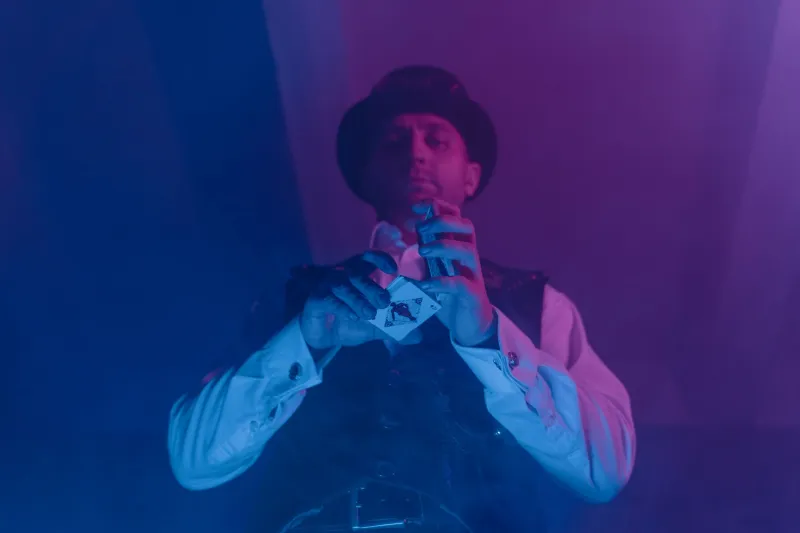
Photo by Photo by Hayley Murray on Unsplash on Unsplash
Ask a magician to describe a perfect performance, and you'll probably hear something about clean technique, invisible sleights, and a finale that leaves people genuinely baffled. Ask a non-magician to describe a magic show they still think about years later, and you'll get something completely different — a story about how it made them feel like a kid again, or how the performer seemed to genuinely connect with someone in the crowd, or how the whole room erupted in this collective moment of shared disbelief.
Those two descriptions are not the same experience. And the gap between them is one of the most underexamined problems in magic.
The Magician's Approval Loop
There's a very specific psychological pull that happens when you're deep in the magic community. You post a video. Other magicians comment. The praise you care most about — the praise that actually feels meaningful — comes from people who understand what you just did technically. A civilian saying "that was so cool!" feels nice. But a respected performer saying "the timing on that second-deal was immaculate" hits different.
This creates a feedback loop where the audience that matters most to your ego is almost never the audience that matters most to your career. Hobbyists, forum regulars, YouTube commenters who can name every move you made — these people are not your paying customers. They're not the ones who hire you for birthday parties, weddings, and corporate events. They're not the people sitting in your theater seats.
And yet, their opinions quietly shape what you practice, what you perform, and what you measure success by.
Technical Perfection vs. Emotional Truth
Here's a thought experiment: imagine two magicians performing the same card trick. Magician A executes it with flawless technical precision — every move is invisible, the handling is impeccable, the method is genuinely clever. Magician B's technique is messier, but they've built a funny, warm story around the trick that makes the audience feel like they're in on something special. The reveal lands with genuine laughter and a little bit of awe.
Which performance will that audience remember in six months?
Almost certainly Magician B's. And this is the uncomfortable truth that technically obsessed magicians often resist: audiences don't experience your method. They experience your moment. They feel the story, the surprise, the connection, the energy in the room. The invisible double lift that took you three years to master registers to them exactly the same as a perfectly ordinary overhand shuffle — which is to say, it registers as nothing at all.
This isn't an argument against developing strong technique. Technique matters enormously — it's the foundation that lets you perform with confidence and freedom. But technique is infrastructure. It's not the performance.
What Paying Audiences Actually Respond To
If you want to understand what moves a real audience, you have to study them the way a scientist studies a subject — with genuine curiosity and without an agenda.
Some patterns show up consistently across different types of audiences:
Personalization beats complexity. A moderately difficult trick that somehow feels specifically tailored to someone in the audience will outperform a technically demanding piece that feels generic. The moment an audience member thinks "how did they know that about me" is more powerful than any sleight-of-hand flourish.
Tension and release are everything. The emotional architecture of a great magic moment is essentially the same as a great joke — buildup, misdirection, and a payoff that arrives at exactly the right time. Audiences feel this rhythm even when they can't articulate it.
People remember how you made them feel, not what you did. This is practically a cliché at this point, but it remains wildly underapplied in magic. The performer who made the audience feel like children experiencing wonder for the first time will be talked about long after the technically superior performer is forgotten.
Relatability is a cheat code. Magicians who find ways to connect their material to universal human experiences — love, embarrassment, ambition, memory — create moments that resonate far beyond the trick itself.
The Practice Misalignment Problem
Here's where this gets practically uncomfortable: if your practice sessions are designed to impress magicians, your performances will be calibrated for the wrong audience.
Think about what you spend most of your practice time on. Is it technical refinement? Sleight-of-hand precision? Keeping up with the latest releases from magic publishers and online shops? These things have real value — but if they represent the majority of your development time, you may be building a performance that's optimized for an audience of one: the imaginary technically sophisticated viewer in your head.
Contrast that with time spent on scripting, storytelling, character development, audience psychology, comedic timing, and emotional pacing. These are the skills that move actual paying audiences — and they tend to get far less attention in a magician's practice routine.
Closing the Gap: Practical Reorientation
This isn't about abandoning technical growth. It's about rebalancing where your attention goes and whose opinion you're actually designing your performances for.
A few places to start:
Record your shows and watch the audience, not yourself. Most performers review footage to critique their own technique. Try watching the crowd instead. When do they lean forward? When do they check their phones? When does the energy drop? The audience will tell you everything if you're willing to look.
Get feedback from non-magicians deliberately. After a show, ask a non-magician friend — or even an audience member — what they'll remember about it. Their answer will probably surprise you, and it will teach you more than any forum thread.
Design at least one piece of your act around an emotional beat rather than a technical one. Start with the feeling you want someone to walk away with, then work backward to find the method that creates it. This reverses the usual process and produces surprisingly different results.
Spend time studying performers outside of magic. Stand-up comedians, storytellers, actors — anyone who moves audiences for a living has figured out something about emotional resonance that magicians often overlook. Their tools translate directly.
The most technically gifted magician in the room isn't always the one the audience loves most. The one they love is the one who made them feel something real — and that's a skill worth practicing just as seriously as any sleight of hand.