Exposed and Unstoppable: Turning Revealed Secrets Into Your Greatest Performance Advantage
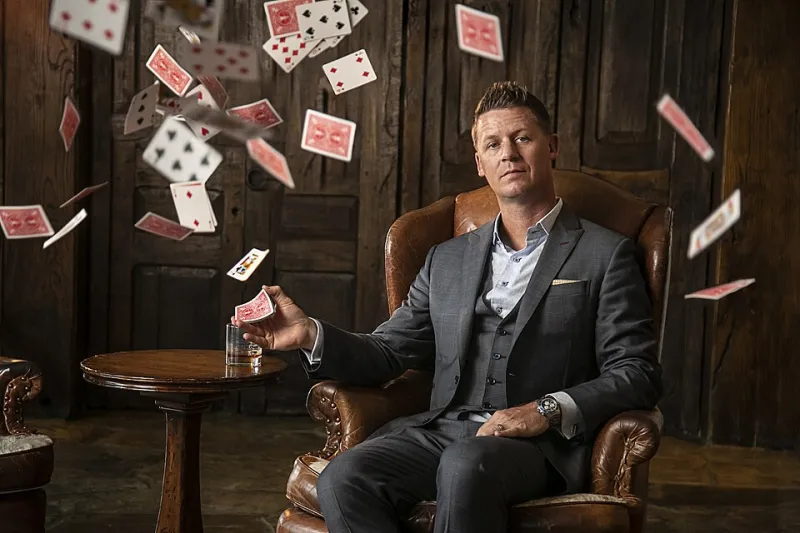
Photo: WhiteTieEnt, CC BY 4.0, via Wikimedia Commons
Somewhere right now, a twelve-year-old in Ohio is watching a YouTube video that explains exactly how your best card trick works. The video has 4.2 million views. The comments are full of people saying "I knew it!" and tagging their friends. And there's absolutely nothing you can do to stop it.
This is the reality of performing magic in 2024, and the magicians who haven't made peace with it are spending enormous creative energy fighting a battle they've already lost. The secrets are out. They've been out. The question worth asking isn't how do we protect the methods — it's what do we do now that the methods don't need protecting?
The answer, it turns out, is more interesting than most people expect.
Why Exposure Doesn't Actually Kill the Experience
Magic's relationship with secrecy has always been more complicated than the industry likes to admit. Research in cognitive psychology consistently shows that knowing how something works doesn't automatically eliminate the emotional experience of watching it happen. This is sometimes called the "exposure effect paradox" — audiences who've been told the method behind a trick still report genuine surprise and delight when they see it performed well.
Why? Because there's a massive difference between intellectual knowledge and sensory experience. You can know, intellectually, that a roller coaster is just a cart on a track — and still feel genuine fear and exhilaration on the ride. You can know how a jump scare works in a horror movie and still flinch when it happens. The brain processes knowledge and experience through different systems, and a skilled performer knows how to target the experiential system even when the intellectual one is already informed.
The exposure isn't the problem. The real problem is performers who rely entirely on secrecy as their primary source of impact — because those performers have nothing left when the secret is gone.
The Psychological Judo Move
Some of the most powerful moments in modern magic happen when a performer openly acknowledges that the audience might already know the method — and then uses that acknowledgment to create something even more disorienting.
Imagine a performer who opens a routine by saying: "You've probably seen this explained online. I know — I've seen the videos too. So let me show you why that explanation doesn't actually help you." Then they proceed to perform the trick in a way that makes the audience's prior knowledge feel completely useless.
This works for a few reasons. First, it removes the defensive intellectual posture that informed audiences often carry into a magic show — the slight smugness of someone who thinks they already know the answer. Once that posture is dismantled, the audience is actually more open to genuine surprise, not less. Second, it creates a meta-layer of intrigue: now the audience isn't just watching a trick, they're watching a puzzle they thought they'd already solved get more complicated in real time.
This is psychological judo — using the audience's existing knowledge as leverage to flip them into a more receptive state.
Innovate Faster Than the Algorithm
Here's a practical reality check: the methods being exposed on YouTube and TikTok today are almost never the newest methods. They're the ones that have been around long enough to become widely performed, widely recognized, and therefore interesting enough to reveal. By the time a method reaches mass exposure, it's already been in circulation for years.
This means there's a genuine innovation window — a period between when a new method is developed and when it becomes widely enough known to be worth exposing. Magicians who are actively developing new material are, by definition, always operating inside that window.
The strategy here isn't to keep secrets forever — it's to keep moving. Stay in development. Treat your act as a living document rather than a finished product. Build a creative pipeline that's always generating new approaches, new presentations, new angles. By the time the internet catches up to what you were doing two years ago, you're already three moves ahead.
This is how fashion designers, musicians, and filmmakers operate in an age of instant copying. The originals don't try to stop imitation — they just make sure they're always further ahead than anyone can follow.
Designing Exposure-Proof Performance
Beyond innovation speed, there are structural ways to build performances that remain powerful regardless of method exposure:
Anchor the impact in the performer, not the method. If your trick's power comes entirely from the secret, exposure kills it. If the power comes from your character, your story, your relationship with the audience — exposure is irrelevant. Audiences don't watch magicians the same way they watch puzzle boxes. They watch people. Build your performances around a compelling human presence, and the method becomes secondary.
Use layered methods. A single-method trick is fragile. A trick that appears to use one method but actually uses another — or that has multiple genuine layers of deception — survives exposure better because knowing one layer doesn't explain the whole experience. When an audience member goes home and looks up "how did they do that," they find an explanation that accounts for maybe 60% of what they experienced. The rest remains genuinely mysterious.
Make the experience impossible to fully describe. This is a presentation strategy. If a trick is purely visual and mechanical, it can be replicated and explained in a two-minute video. If it involves genuine interpersonal moments, spontaneous audience interaction, or emotional beats that are specific to that performance — it can't be reduced to a tutorial. Design for the unrepeatable.
Lean into the meta-performance. Some contemporary performers have built entire acts around the concept of exposure itself — openly discussing how tricks work, then demonstrating why that knowledge doesn't protect you. This approach is genuinely fresh, deeply engaging for modern audiences, and almost impossible to undermine through YouTube revelations because the revelations are already part of the show.
The Bigger Shift
The magicians who are thriving in this environment have made a quiet but significant philosophical shift: they've stopped thinking of their secrets as their product and started thinking of their perspective as their product. The secret is just a mechanism. The perspective — the way they see the world, the stories they tell, the emotional experiences they create — is something that can't be extracted from a tutorial video.
Exposure is real. It's not slowing down. But it only has power over performers who've built their entire act on the assumption that the audience doesn't know the trick. Build something deeper than that, and the exposure problem stops being a threat — and starts being a conversation starter.